Understanding How Stock Market Prices Move: Demand, Supply & Market Psychology is essential for every trader and investor. Stock prices change based on buying demand, selling supply, and investor emotions such as fear and greed. When demand exceeds supply, prices rise; when supply dominates demand, prices fall. Market psychology, news events, economic indicators, and institutional activity also influence price movement. In this guide, we explain the real mechanics of stock price movement with tables, examples, case studies, and trading insights. If you want to understand how the market really works, this detailed article on How Stock Market Prices Move: Demand, Supply & Market Psychology will help you build a strong investing foundation.
How Stock Market Prices Move: Demand, Supply & Market Psychology?
Stock market prices move based on demand and supply dynamics combined with market psychology. When more investors want to buy a stock than sell it, demand increases and the price rises. When selling pressure dominates buying interest, prices fall. Investor emotions such as fear, greed, and speculation also influence these movements.
Introduction
Every day millions of investors participate in the stock market, buying and selling shares worth billions of dollars. But a fundamental question still fascinates beginners and professionals alike: How Stock Market Prices Move: Demand, Supply & Market Psychology?
The answer lies in a simple but powerful economic principle—the balance between buyers and sellers. Stock prices rise when demand for a stock increases and fall when supply exceeds demand. However, this simple concept becomes complex when factors such as investor sentiment, institutional trading, economic data, and global news enter the equation.
For example, if a company reports strong earnings, investors may rush to buy the stock. The surge in demand pushes the price higher. On the other hand, negative news such as regulatory issues or economic slowdown may trigger panic selling, increasing supply and pushing the price down.
Market psychology also plays a huge role. Emotions like fear, greed, optimism, and uncertainty influence investor decisions. This psychological behavior often causes sharp price movements even when fundamentals remain unchanged.
In this detailed guide, we will explore How Stock Market Prices Move: Demand, Supply & Market Psychology, understand real market mechanics, review real examples, and learn how traders interpret these movements to make profitable decisions.
Download PDF
Download the complete guide:
Click Here to Download [How Stock Market Prices Move: Demand, Supply & Market Psychology] PDF
What Does Demand and Supply Mean in the Stock Market?
Demand and supply represent the number of buyers and sellers willing to trade a stock at a specific price.
When demand exceeds supply, buyers compete to purchase shares, pushing the price higher.
When supply exceeds demand, sellers compete to sell their shares, pushing the price lower.
Table: Basic Demand vs Supply Effect on Price
| Market Condition | Buyer Activity | Seller Activity | Price Direction |
|---|---|---|---|
| High Demand | Many buyers | Few sellers | Price rises |
| Balanced Market | Equal buyers and sellers | Stable | Price stable |
| High Supply | Few buyers | Many sellers | Price falls |
Official stock market education sources like U.S. Securities and Exchange Commission (SEC) explain this mechanism in detail.
https://www.sec.gov
Why Do Stock Prices Change Every Second?
Stock prices change continuously because thousands of transactions occur every second in modern electronic exchanges.
Factors responsible for price movement include:
-
Buying and selling orders
-
Institutional trading
-
Company news
-
Economic indicators
-
Global market sentiment
Major Drivers of Stock Price Movement
-
Demand and supply imbalance
-
Company earnings reports
-
Economic data and interest rates
-
Global events and geopolitical risk
-
Investor psychology and speculation
What Role Does Market Psychology Play in Price Movement?
Market psychology refers to the collective emotions and behavior of investors.
Two emotions dominate the financial markets:
Fear
Greed
Fear triggers panic selling.
Greed triggers aggressive buying.
These emotional reactions can cause large price swings.
Table: Psychological Factors Influencing Market Prices
| Investor Emotion | Typical Market Behavior | Price Impact |
|---|---|---|
| Greed | Investors chase rising stocks | Rapid price increase |
| Fear | Investors panic sell | Sharp price drop |
| Optimism | Investors expect growth | Gradual uptrend |
| Uncertainty | Investors hesitate | Sideways movement |
How Do Institutional Investors Move Stock Prices?
Institutional investors control large capital flows. These include:
-
Mutual funds
-
Hedge funds
-
Pension funds
-
Insurance companies
-
Investment banks
When institutions buy large volumes of shares, demand increases dramatically, pushing prices higher.
When they sell, supply increases, leading to price declines.
According to data from National Stock Exchange (NSE India), institutional investors account for a large share of daily trading volume.
https://www.nseindia.com
What Happens When Demand Suddenly Surges?
A sudden increase in demand creates a price breakout.
This often occurs when:
-
Companies announce strong earnings
-
New products launch
-
Positive economic news appears
-
Institutional buying begins
Example:
In 2023, several Indian technology stocks experienced rapid rallies after strong quarterly earnings reports. Increased investor demand pushed their prices upward.
What Happens When Selling Pressure Increases?
Selling pressure increases supply and causes price declines.
Common triggers include:
-
Negative company news
-
Economic recession fears
-
Profit booking
-
Market corrections
When many investors sell simultaneously, stock prices fall quickly.
Table: Key Factors That Influence Stock Prices
| Factor | Impact on Demand | Impact on Supply |
|---|---|---|
| Positive Earnings | Increases demand | Lowers selling |
| Economic Growth | Increases investment | Stable supply |
| Negative News | Reduces demand | Increases selling |
| High Interest Rates | Reduces buying | More selling |
Realistic Case Study: How Market Psychology Moved a Stock
Rohit, a retail investor from Mumbai, closely tracked a technology stock listed on NSE.
The company announced a strong earnings report showing significant revenue growth.
What happened next:
-
News spread quickly among investors.
-
Retail traders started buying aggressively.
-
Institutional investors also accumulated shares.
Within three days:
Demand increased dramatically.
The stock price jumped nearly 12 percent.
However, after the rally, early investors began booking profits. Selling pressure increased and the stock corrected slightly.
This example shows how demand, supply, and investor psychology interact in real markets.
How Do Traders Use Demand and Supply for Trading?
Professional traders analyze demand and supply zones.
Demand zones are price levels where buying pressure historically increases.
Supply zones are areas where selling pressure appears.
Traders use these levels to:
-
Identify entry points
-
Set stop losses
-
Predict reversals
How Do Economic Events Influence Stock Prices?
Economic indicators affect investor expectations.
Important indicators include:
-
GDP growth
-
Inflation rate
-
Interest rate decisions
-
unemployment data
Positive economic data usually increases market demand, while negative data increases selling pressure.
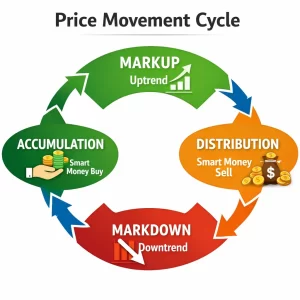
Visual Explanation: Price Movement Cycle
Stock price movements usually follow this cycle:
Accumulation
Uptrend
Distribution
Downtrend
Understanding this cycle helps traders interpret market behavior more effectively.
Internal Linking for FinBankingTech
Suggested internal articles:
Top 10 Indicators Used for Stock Price Prediction
AI Stock Price Prediction Using Machine Learning
Best Technical Analysis Strategies for Beginners
Intraday Trading Strategies That Work
Example anchor text:
“Learn more in our detailed guide on Top 10 Indicators Used for Stock Price Prediction.”
Join Our Finance Community
Telegram Updates
https://finbankingtech.com
WhatsApp Support
7905455959
Official Website
https://finbankingtech.com
Frequently Asked Questions
What causes stock prices to rise?
Stock prices rise when demand for a stock exceeds supply. When more investors want to buy shares than sell them, buyers compete and offer higher prices, pushing the stock price upward.
What causes stock prices to fall?
Stock prices fall when selling pressure increases. If more investors want to sell a stock than buy it, supply exceeds demand, leading to lower prices.
How does market psychology affect stock prices?
Market psychology reflects investor emotions such as fear and greed. These emotions influence buying and selling decisions, often causing large price swings in the stock market.
Do news events influence stock prices?
Yes. News such as earnings announcements, economic policies, mergers, or geopolitical events can significantly influence demand and supply in the stock market.
Why do stock prices change every second?
Stock prices change continuously because investors are constantly placing buy and sell orders. Modern electronic exchanges match these orders instantly, leading to frequent price updates.
What is a demand zone in trading?
A demand zone is a price level where buyers historically enter the market strongly, causing prices to rise.
What is a supply zone in trading?
A supply zone is a price area where selling pressure historically increases and prices often decline.
Do institutional investors influence stock prices?
Yes. Institutional investors trade large volumes of shares, which can significantly impact demand and supply dynamics.
How do earnings reports affect stock prices?
Strong earnings often increase investor confidence and demand for a stock, while weak earnings may lead to selling pressure.
What is market sentiment?
Market sentiment refers to the overall attitude of investors toward the stock market or a specific stock.
Can psychology create stock market bubbles?
Yes. Excessive optimism and speculation can create market bubbles where prices rise beyond fundamental value.
What is panic selling?
Panic selling occurs when investors sell stocks quickly due to fear of further price declines.
Why do stock prices move before news becomes public?
Institutional investors and analysts often anticipate events before official announcements, causing price movements in advance.
Do interest rates affect stock prices?
Yes. Higher interest rates often reduce investment in stocks because borrowing becomes more expensive.
What is a market correction?
A market correction refers to a decline of about 10 percent from recent highs.
Why do traders analyze demand and supply zones?
These zones help traders identify potential price reversal points.
Can beginners understand stock price movements easily?
Yes. By learning basic concepts such as demand, supply, and market psychology, beginners can better understand price movements.
Do global markets influence local stock markets?
Yes. International economic trends and global events often impact domestic markets.
What role does speculation play in stock prices?
Speculation can temporarily push prices higher or lower based on expectations rather than fundamentals.
Is stock price prediction always accurate?
No. Stock markets are influenced by many unpredictable factors, so predictions are never guaranteed.
Disclaimer
This article is for educational purposes only. Stock market investments involve risk, and price movements cannot be predicted with complete accuracy. Investors should conduct their own research or consult a financial advisor before making investment decisions.