Debit Card vs Credit Card: Learn the complete difference between Debit Card and Credit Card. Meaning, features, benefits, pros & cons, charges, eligibility, and FAQs explained in a simple and unique way.
Debit Card vs Credit Card
Introduction
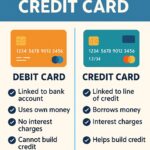
Choosing between a debit card and a credit card might feel like a small decision — until a late fee or a fraud alert proves otherwise. Both cards let you pay quickly, shop online, and withdraw cash, but they differ in how money moves, who carries the risk, and what benefits they give. A debit card draws directly from your bank balance; a credit card borrows money that you must repay, often with perks like rewards, EMI options and travel protections.
This guide covers the meaning, key differences, pros & cons, eligibility, charges, and 20 commonly asked questions — all written in practical, non-technical language so you can choose the right card for your lifestyle and money goals.
Quick Overview
| Feature | Debit Card | Credit Card |
|---|---|---|
| Source of Money | Your bank balance | Bank-provided credit limit |
| Monthly Bill | No | Yes |
| Interest | No | Charged on unpaid balances |
| Credit Score Impact | No direct impact | Yes — both positive & negative |
| Best For | Daily spending, ATM | Online shopping, large purchases, rewards |
Important Links
- Official Website: https://finbankingtech.com
- Telegram Channel: https://t.me/Finbakingtech
- WhatsApp Community: https://wa.me/7905455959
Eligibility Criteria
Debit Card
- Open a savings/current account with the bank
- Complete KYC (ID & address)
- No minimum income required
- Available to students, seniors, salaried
Credit Card
- Minimum age (usually 18+)
- Proof of income (salary slip / ITR)
- Good credit history preferred
- Secured cards available against fixed deposit
Meaning & How They Work
What is a Debit Card?
A debit card is linked directly to your bank account. When you pay with it, funds are deducted almost instantly from your account balance. Debit cards are ideal for day-to-day spending and ATM withdrawals.
What is a Credit Card?
A credit card provides a short-term loan up to a preset limit. Purchases create a monthly statement that you must pay by the due date. If you carry a balance, interest will be charged.
Debit Card vs Credit Card — Side-by-side Comparison
| Category | Debit Card | Credit Card |
|---|---|---|
| Spending Limit | Limited to account balance | Bank assigns credit limit |
| Interest | No interest | Interest on unpaid balance |
| Rewards | Limited or none | Cashback, points, travel perks |
| Dispute Resolution | Available but can take time | Strong chargeback support |
| Risk of Overspending | Low | Higher if mismanaged |
Visual Comparison
A quick visual: control (spending discipline) vs rewards (benefits)
Debit Card — Control
85/100
Debit Card — Rewards
20/100
Credit Card — Control
55/100
Credit Card — Rewards
80/100 (visual)
Note: Values are illustrative to highlight strengths (control vs rewards).
Pros & Cons
Debit Card — Pros
- No debt — spend what you have
- Low fees for basic cards
- Helps budgeting
- Instant payments from bank
Debit Card — Cons
- Limited or no rewards
- Less purchase protection
- Direct exposure to bank balance during fraud
Credit Card — Pros
- Rewards, points, cashback
- Short-term interest-free credit if paid in full
- EMI & purchase protection
- Builds credit history when used responsibly
Credit Card — Cons
- High interest on carried balances
- Late fees & penalty charges
- Risk of overspending
Practical Use Cases — When to Use Which Card
Use Debit Card For
- Daily groceries, local travel, small merchants
- ATM cash withdrawals
- When you’re strictly budgeting
Use Credit Card For
- Online purchases requiring purchase protection
- Large purchases with EMI option
- Travel bookings and foreign transactions (with low forex fee card)
- Subscription payments & recurring bills
Common Charges & Fees
| Fee Type | Debit Card | Credit Card |
|---|---|---|
| Annual/Issuance Fee | Often none or low | Common (varies by card) |
| Cash Withdrawal Fee | May apply after freebies | High + immediate interest |
| Late Payment Fee | Usually N/A | Yes — can be significant |
Security & Fraud Protection
Both card types use EMV chips, PINs, OTPs, tokenization and 3D Secure (for online payments). Credit cards often offer stronger consumer protection (chargebacks) and insurance benefits; however, debit cards can be secured using bank alerts, transaction limits and virtual cards to minimize exposure.
Quick security tips
- Enable transaction SMS/email alerts
- Use virtual cards for one-time online payments
- Set daily ATM/purchase limits
- Never share your CVV/PIN/OTP
ITR Kaise Bhare? Step-by-Step ITR Filing Guide Online (2025)
No-Fee Bank Accounts : What They Are & How to Find the Best Ones
20 Frequently Asked Questions (FAQs)
1. Which is safer: Debit or Credit Card?
2. Does debit card affect credit score?
3. Can I get EMI on debit card?
4. Which card is better for online shopping?
5. Is credit card interest high?
6. Can I withdraw cash using a credit card?
7. Can students get credit cards?
8. Which card is best for international payments?
9. Are debit cards free?
10. How to choose the best credit card?
11. Can I increase my credit limit?
12. Why might my credit card be rejected?
13. What is a secured credit card?
14. What happens if I don’t pay my credit card bill?
15. Can I use debit card for subscriptions?
16. Which card is best for beginners?
17. Are virtual credit cards safe?
18. Can I use both debit and credit cards together?
19. Do credit cards offer free insurance?
20. Which card should I use for subscriptions?
Final Takeaway
There’s no one-size-fits-all answer: use a debit card for day-to-day control and a credit card for benefits, emergencies and to build credit — but only if you can manage repayments. The smart approach is a disciplined mix of both.